Vibe as a Business Model: Poolsuite and the Aesthetic Leisure Brand Playbook
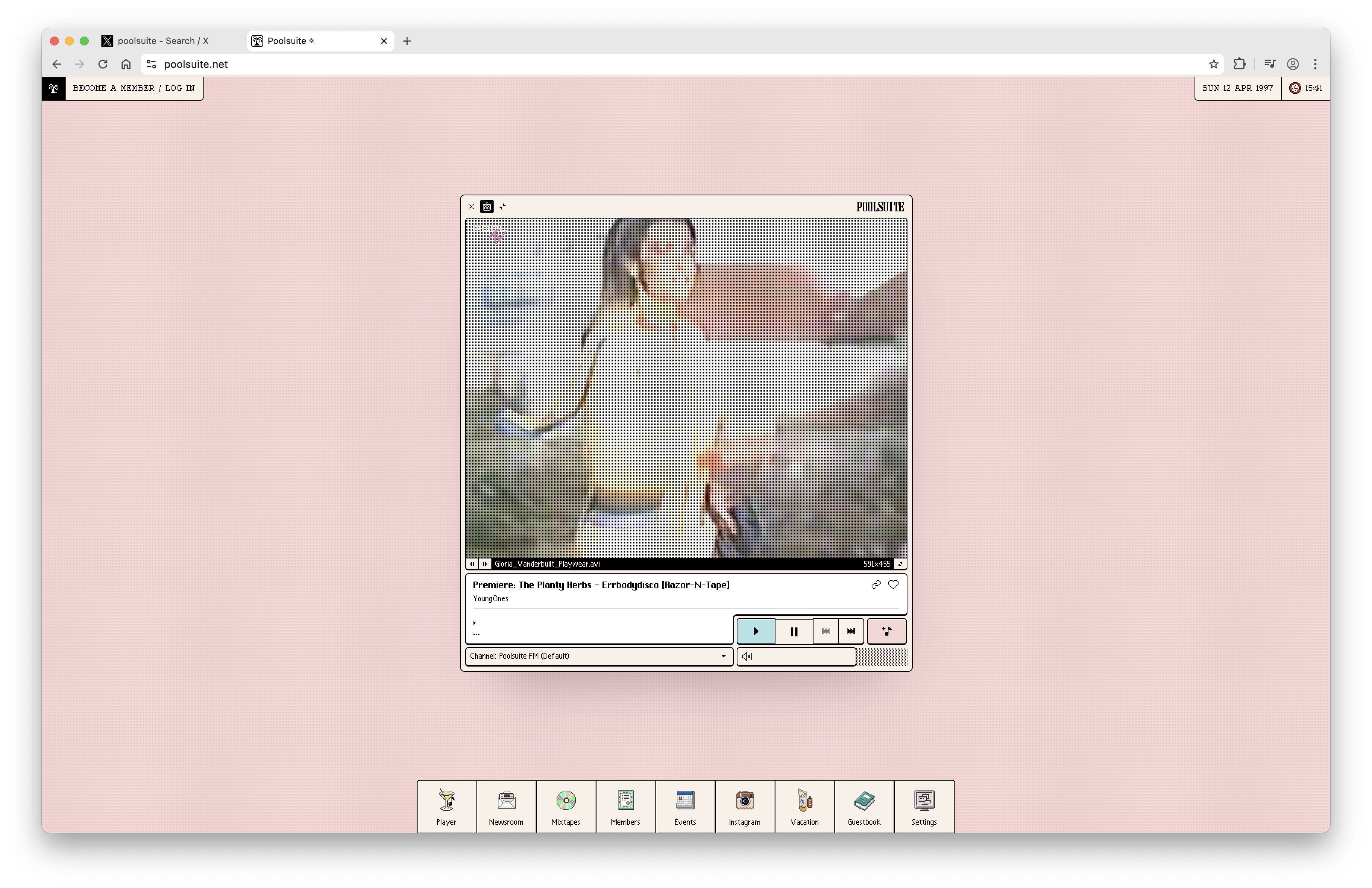
That tweet captures something real. People are hungry for more brands like Poolsuite. The question is: what exactly IS a Poolsuite? And how do you build one?
1. The Poolsuite Playbook: How a Scottish Guy With a Tumblr Built a $210M Empire
Marty Bell was living with his parents in the Scottish Highlands in 2014. It rained constantly. He wanted to feel like he was somewhere warm. So he made a website: Poolside FM. A retro interface streaming 80s dance pop over looping VHS footage of people lounging by pools. That's it. A vibe machine.
He posted it on Reddit's r/InternetIsBeautiful. It went viral. Vice and Manrepeller covered it. Within a few years, the site was doing roughly 1 million listening sessions annually. Operating costs: $200/month. Zero investors. Zero employees.
Then Bell did something that most media people never figure out: he turned the vibe into physical products.
The Revenue Stack
- Poolsuite FM (2014): the free internet radio station. Pure top of funnel. 1M+ annual sessions. Cost: $200/month. Revenue: zero. But it created something money can't buy: an aesthetic identity so strong that people wanted to physically inhabit it.
- Palm Report (newsletter): 80,000+ subscribers. A weekly curation of "the good life" online and offline. Free tier plus "Professional" paid tier with extended Thursday emails and Sunday Special editions. The newsletter does what the radio couldn't: it builds a direct relationship with humans who have email addresses and credit cards.
- Vacation Inc. (2021): retro 80s sunscreen. This is where it gets insane. Bell and cofounders Lach Hall and Dakota Green realized sunscreen has everything that made Poolside FM viral: nostalgia, sensory experience (the smell, the texture), beautiful packaging, and a reason to exist in the real world. They pitched investors with a 42 page "pitch novella" instead of a deck. Pre launch campaign from a Dominican Republic villa. 10,000+ people claimed humorous job titles during launch. Vogue, Vanity Fair, Forbes, Fast Company all covered it.
- Grand Leisure NFTs (2022): 10,000 PFP collection. Executive Member passes with real world perks (event access, product drops, Apple Wallet integration). Partnered with Ralph Lauren. Clever or cringe depending on your timeline, but it worked as a community funding mechanism.
- Events: parties at Le Bain in NYC, venues in London. Disco balls, pools, white unicorn props. Breakbot and Natasha Diggs on the decks. These events ARE the brand. You can't screenshot a party.
The Numbers
Vacation hit $40M+ in revenue and is now in 2,500+ retailers: Target (#1 SPF brand), Ulta, Nordstrom, Kith, CVS, Costco. In 2025, VMG Partners invested $70M at a $210M valuation. The bulk went to secondary transactions (Bell and the founders cashing out some equity). Projected 2025 sales: $54M to $80M depending on the source. They also launched a standalone Eau de Toilette fragrance with Arquiste Parfumer.
From a $200/month Tumblr to a $210M valuation in 11 years. The product is sunscreen. The actual product is a feeling.
2. The Model: Aesthetic Media > Physical Product > Lifestyle Empire
Poolsuite isn't unique in what it did. It's unique in how cleanly it executed a model that several other brands have also proven:
Monocle (Tyler Brûlé)
Launched in 2007 as a magazine about global affairs and high end lifestyle. Brûlé then built: Monocle 24 (24 hour online radio), retail shops in six cities, cafés in London and Tokyo, travel guides, hardback books, sponsored conferences, 35 radio shows per week. Sold a minority stake to Nikkei in 2014 at a ~$115M valuation. The magazine is the vibe. Everything else is the business.
Sporty & Rich (Emily Oberg)
Started in 2015 as an Instagram mood board. Literally just pictures Emily liked: vintage Ralph Lauren, tennis courts, old Porsche ads. Then a print magazine. Then apparel. Revenue in 2025: $35M to $40M. 100% founder owned. Collaborations with Adidas, Lacoste, Prince. Flagship store in NYC. Oberg owns the whole thing. She bootstrapped a Pinterest board into a fashion brand doing eight figures.
Aimé Leon Dore (Teddy Santis)
Founded 2014 in Queens. ALD doesn't sell clothes. It sells a romanticized vision of golden era New York: bodega coffee, basketball courts, old BMWs, Greek diners. Seasonal lookbooks that feel like short films. Café Leon Dore (a real café inside the store). Collaborations with New Balance, Porsche, La Marzocco. When you buy ALD, you buy a perspective. The garments are just the receipt.
Kinfolk (Nathan Williams)
Started 2011 as a print magazine about slow living, community, and craft. The "Kinfolk aesthetic" (white linen, natural light, ceramic bowls, latte art) basically defined an entire decade of Instagram. The magazine became a creative agency, an event series, a lifestyle authority. The brand is the aesthetic. The aesthetic is the brand.
Rowing Blazers (Jack Carlson)
Founded by an actual Olympic rower with a PhD in archaeology. The brand packages Ivy League prep, vintage collegiate sports, and British eccentricity into clothing that's in on its own joke. Started with a coffee table book about rowing blazers. Now: full fashion brand, collaborations with Fila and J.Crew, stores in NYC. From a book about old jackets to a lifestyle brand.
3. The Pattern
Every one of these brands follows the same arc:
- Start with taste. Not a product. Not a company. A point of view. A mood board. A radio station. A magazine. An Instagram account. Something that says: "THIS is what the good life looks like, and most people are getting it wrong."
- Build an audience around the aesthetic. Free content. Beautiful content. Content so good that people share it not because it's useful but because it makes them look tasteful for sharing it.
- Monetize with physical products that embody the vibe. Not random merch. Products that are the physical manifestation of the feeling the media creates. Poolsuite's sunscreen smells like the radio station sounds. Sporty & Rich's clothes look like the Instagram feed felt. Monocle's shops feel like the magazine reads.
- Expand into experiences. Events, cafés, retreats, stores. Things you can't digitize. Things that create FOMO. Things that turn customers into community members.
- The brand becomes a world. At scale, you're not selling products. You're selling membership in a taste tribe. The products are tokens of belonging.
4. Why This Model Works Now
Three structural reasons:
1. Distribution is free; taste is scarce. Anyone can start a newsletter, a radio stream, an Instagram account. The marginal cost of distributing aesthetic content is zero. But genuine taste (a coherent point of view about how life should feel) is rare. Most brands look like committees designed them. The brands on this list look like one person's obsession. That's the moat.
2. Physical products escape the algorithm. Digital content is at the mercy of platforms. But a bottle of sunscreen on a Target shelf is permanent. A magazine on a coffee table is permanent. The smart move is: use free digital content to build the audience, then convert them to physical products that exist outside the algorithm's reach.
3. People are desperate for aesthetic coherence. Modern life is visually chaotic. Feeds are cluttered. Ads are everywhere. A brand that offers a complete, coherent aesthetic world (this is what your morning looks like, this is what your desk looks like, this is what your weekend looks like) provides genuine psychological relief. It's curation as a service.
5. 15 Untapped Aesthetic Leisure Niches
Poolsuite owns "80s Miami pool party summer forever." That niche is taken. But the model works for ANY coherent aesthetic with enough cultural depth to sustain a media brand, physical products, and a community. Here are 15 wide open ones.
1. "The Alpine Bureau": European Mountain Modernism
The vibe: Swiss chalets, Dieter Rams furniture, morning fog over Lake Lucerne, fondue at altitude, Alvar Aalto lighting, the sound of cowbells across a valley. Winter as luxury, not inconvenience. Think: Wes Anderson's Grand Budapest meets a Braun catalog.
The aesthetic: cream wool, dark wood, fog grey, copper accents. Helvetica (obviously). Clean lines with warmth. The visual language of Swiss International Style applied to a lifestyle brand.
The products: wool blankets from Swiss mills. Copper pour over coffee sets. Alpine herb candles. A beautifully designed hiking journal. Merino base layers with discreet branding. A pocket field guide to Alpine wildflowers. Fondue kits.
The media: weekly newsletter curating Alpine architecture, mountain culture, European design, and the quiet life. Ambient audio streams of mountain environments (Poolsuite FM but it's cowbells and wind instead of 80s synth). A podcast about craftsmanship, small town European life, and the philosophy of slowness.
The audience: design professionals, architecture lovers, skiers, Europhiles, the "cabin" aesthetic crowd, Monocle readers who want something more focused, hygge enthusiasts who've outgrown the Danish version and want the Swiss upgrade.
Why it's open: the Alpine aesthetic has massive cultural cachet but zero dedicated lifestyle brand. Swiss tourism boards spend millions promoting it. Kinfolk did the Scandinavian version. Nobody's done the Alpine version.
2. "Dune Club": Saharan Minimalism
The vibe: desert light at golden hour. Marrakech riads. Berber textiles. Tea ceremony in the sand. Frank Herbert meets Yves Saint Laurent's Jardin Majorelle. Ochre, terracotta, indigo. Silence as luxury.
The products: handwoven Berber rugs (small, desk sized). Mint tea sets in hammered brass. Leather journals made by Moroccan artisans. Incense blends (frankincense, myrrh, sandalwood). Linen shirts in sand tones. A curated spice collection.
The media: weekly newsletter on desert architecture, North African design, minimalist living. Photography heavy. Ambient audio: wind over dunes, distant calls to prayer, water in a courtyard fountain.
The audience: the "earthy minimalism" crowd. Interior designers. People who travel to Morocco and never recover. Anyone who watched Dune and thought "I want to live there." The overlap with the meditation/mindfulness market is huge.
Why it's open: Moroccan and North African aesthetics are everywhere in interior design but there's no lifestyle brand packaging it. The closest thing is random Etsy shops selling Berber goods. A coherent brand with media + products + community would own this space overnight.
3. "Harbor Light": New England Maritime Heritage
The vibe: weathered shingles on Nantucket. Lobster rolls at a dock counter. A wooden sailboat in morning fog. Rope, brass, and canvas. Kennedy compound energy without the politics. The sound of halyards clinking against masts.
The products: brass nautical instruments (compasses, barometers, sextant replicas). Waxed canvas tote bags. Hand tied sailor's knots in shadow boxes. Clam chowder recipe kits. Breton stripe shirts. A beautifully designed tide chart for your coast. Rope bracelets.
The media: weekly newsletter on maritime history, coastal living, boat design, and the New England tradition. A radio stream of sea shanties, classic rock, and harbour ambience. A podcast on craftsmanship, ocean conservation, and the people who still make things by hand in coastal towns.
The audience: Rowing Blazers adjacent crowd. Preppy aesthetic lovers. Sailing culture. Coastal New Englanders and people who wish they were. The "quiet luxury" market that exploded in 2023 and never went away.
Why it's open: vineyard Vines tried but became a joke (too commercial, too fratty). The authentic New England maritime brand doesn't exist as a coherent media + product operation. There's a gap between Vineyard Vines (too mass) and actual maritime antique shops (too niche).
4. "Café Minuit": French Nocturnal Intellectualism
The vibe: midnight in Paris, but not the tourist version. Zinc bar countertops. Gauloises smoke. Jazz from a basement club. A copy of Libération folded on the counter. Godard, Gainsbourg, Sagan. The Left Bank at 2am when only the writers and the insomniacs are still awake.
The products: French roast coffee subscriptions. Pocket editions of French literature (bilingual). Zinc candle holders. Moleskine style notebooks with a Parisian twist. Vintage style poster prints of French jazz clubs. A curated perfume collaboration (smoky, leathery, coffee forward). Wine subscriptions from small French producers.
The media: late night newsletter. Sent at midnight. Curating French culture, film, literature, and nightlife. A radio stream of French jazz, chanson, and electronic. A podcast about French intellectual life that's actually fun (not academic). Film recommendation series.
The audience: Francophiles (enormous market). Dark academia crowd. Film lovers. The "Parisian apartment" aesthetic community on Instagram and TikTok. Anyone who romanticizes French culture. Emily in Paris viewers who want the real thing.
Why it's open: the French lifestyle brand space is dominated by actual French luxury houses (Chanel, Hermès) at the high end and tourist kitsch at the low end. Nobody occupies the middle: authentic, intellectual, affordable, beautiful. A media first brand could own the "Parisian night" aesthetic globally.
5. "Terracotta": Mediterranean Slow Living
The vibe: an afternoon in Puglia. Whitewashed walls, terracotta tiles, olive groves, a plate of burrata with nothing else needed. Linen everything. The Mediterranean diet as philosophy, not diet. Elena Ferrante meets a long lunch.
The products: olive oil from small Italian producers (branded, beautiful bottles). Handmade ceramics from southern Italian workshops. Linen tablecloths and napkins. A terracotta planter collection. Italian recipe zines. Limoncello kits. Straw market bags.
The media: weekly newsletter on Mediterranean architecture, food, culture, and the art of doing nothing (dolce far niente). Photography of crumbling Italian beauty. A radio stream of Italian folk, bossa nova, and café ambience. Seasonal recipe emails.
The audience: the "slow living" movement. Food lovers. Italy obsessives. Interior designers. The cottagecore crowd's Mediterranean cousin. Anyone who's been to the Amalfi Coast and restructured their entire life philosophy around it.
Why it's open: Mediterranean aesthetic is the single most popular interior design trend of the last five years. Terracotta, olive tones, rustic ceramics: it's everywhere. But there's no brand that owns it as a coherent lifestyle. Vacation owns the pool. Someone needs to own the terrace.
6. "Midnight Garage": Japanese Car Culture and Mechanical Devotion
The vibe: a Tokyo garage at midnight. Fluorescent lights on a perfectly maintained 1993 Nissan Skyline R32. Wrenches organized by size. JDM stickers on a toolbox. Initial D on a CRT television in the corner. Coffee from a vending machine. The spiritual practice of maintaining something beautiful with your hands.
The products: high quality mechanic's tools in custom pouches. JDM style enamel pins and stickers. Japanese Domestic Market car magazines (curated imports). Model car kits (Tamiya). Overalls and mechanic's jackets with subtle branding. A "garage ambient" candle (motor oil, leather, fresh rubber). Japanese vending machine coffee subscriptions.
The media: weekly newsletter on JDM culture, mechanical craftsmanship, car builds, and the philosophy of maintenance. A radio stream of city pop, lo fi, and late night Tokyo sounds. YouTube: beautifully shot garage build videos (there's a template: Larry Chen, but more aesthetic and less car show).
The audience: car enthusiasts (one of the largest hobby demographics on earth). JDM culture devotees. Initial D and Wangan Midnight fans. The "tools as aesthetic objects" crowd. Anyone who finds satisfaction in fixing things with their hands. The maker movement's automotive wing.
Why it's open: car culture has massive media (YouTube, magazines, forums) but zero lifestyle brand packaging. Aimé Leon Dore proved cars and fashion work together (the Porsche collab). Nobody has built the media first version focused on the GARAGE, not the showroom. The aesthetic (Japanese precision, midnight work sessions, mechanical devotion) is visually stunning and culturally deep.
7. "The Vinyl Bureau": Analog Audio Worship
The vibe: a perfectly organized record collection. Warm tube amplifier glow. A turntable needle dropping onto wax. Acoustic foam on the walls. Listening to a full album, start to finish, without touching your phone. The radical act of paying attention to one thing for 45 minutes.
The products: record cleaning kits in beautiful packaging. Turntable accessories (slipmats, weights, brushes). A monthly vinyl subscription (one curated record, not random: selected to match the brand's aesthetic). Tube amp desk lamps (repurposed vacuum tubes as light sources). Acoustic panel art prints (functional AND beautiful). Listening journals.
The media: weekly newsletter profiling one album in depth (history, production, cultural context, why it matters now). A radio stream, obviously. A podcast that's just two people listening to an album together and talking about it. No guests. No ads. Just listening.
The audience: vinyl collectors (the vinyl market hit $1.2B in 2023 and is still growing). Audiophiles. Music nerds who've aged out of Pitchfork. The "attention economy resistance" crowd who want to practice deep listening. Spotify users who secretly know they're missing something.
Why it's open: vinyl is booming but the brand landscape is just record labels and equipment manufacturers. Nobody owns the CULTURE of vinyl listening as a lifestyle brand. Poolsuite is music as background. This is music as foreground. Complementary, not competitive.
8. "Fern & Stone": Pacific Northwest Naturalism
The vibe: old growth forest in Oregon. Moss on everything. A cabin with a wood stove and a stack of Ursula Le Guin novels. Rain on a tin roof. Mushroom foraging at dawn. Coffee roasted by someone who moved to Portland in 2009 and never looked back.
The products: mushroom foraging kits (basket, knife, field guide). PNW roast coffee subscriptions. Beeswax candles in hand thrown ceramic holders. Wool socks from Oregon mills. Botanical prints of ferns, moss, and forest fungi. A rain sound machine (a physical object, not an app). Handmade soap from foraged ingredients.
The media: weekly newsletter on forest ecology, cabin life, naturalist philosophy, and the PNW creative community. Ambient audio: rain, wind in Douglas firs, creek water, birdsong. A podcast about going outside, slowing down, and what the forest teaches you about yourself.
The audience: the outdoor industry (a $900B+ market). Cottagecore people. PNW locals and aspirants. Ursula Le Guin and Annie Dillard readers. Mushroom culture (which is enormous and growing). The "forest bathing" / shinrin yoku crowd.
Why it's open: outdoor brands (Patagonia, REI) are performance focused. Cottagecore brands are English garden focused. Nobody owns the PNW forest specifically as an aesthetic lifestyle brand. The Pacific Northwest has one of the most distinctive visual identities of any region on earth (green, wet, mossy, misty) and zero brand representation outside of coffee roasters.
9. "Solar Library": Afrofuturist Leisure
The vibe: Sun Ra meets a Lagos penthouse. Gold, violet, deep space blue. Ankara prints on mid century furniture. A bookshelf full of Octavia Butler and Chinua Achebe. African electronic music on the speakers. Ancient Egyptian motifs reimagined through a sci fi lens. Wakanda as interior design.
The products: Ankara print desk accessories. Afrofuturist art prints (commissions from African and diaspora artists, revenue shared). Shea butter and black soap luxury sets from West African producers. A curated book subscription (African and diaspora literature). Gold geometric jewelry inspired by Egyptian and Nubian design. Incense sets (frankincense from the Horn of Africa).
The media: weekly newsletter on Afrofuturism, African design, diaspora culture, and the intersection of tradition and technology. A radio stream: Afrobeats, jazz fusion, Sun Ra, Burna Boy, African electronic. A podcast on African innovation, art, and the future of the continent.
The audience: the African diaspora (enormous global market). Afrofuturism fans (Black Panther grossed $1.3B; the audience is proven). Design lovers attracted to the richness of African aesthetics. Tech workers in Lagos, Nairobi, and Accra. Anyone looking for a non Western aesthetic framework that's forward looking rather than nostalgic.
Why it's open: Afrofuturism has massive cultural momentum but zero dedicated lifestyle brand. The aesthetic is one of the most visually striking on this entire list. The market is global (African diaspora spans every continent). And unlike most aesthetic brands that look backward (nostalgia for the 80s, the 50s, the Ivy League), this one looks forward. That's a fundamentally different positioning.
10. "Onsen House": Japanese Bathing Culture
The vibe: a traditional Japanese onsen at dusk. Steam rising from mineral water. Hinoki cypress wood. A yukata robe. Complete silence except for water flowing over stone. The radical luxury of being clean, warm, and present. The Japanese concept of "hadaka no tsukiai" (naked communion): the intimacy of bathing together without pretense.
The products: hinoki bath accessories (stools, buckets, soap dishes). Japanese bath salts and mineral soaks. Yukata robes in contemporary patterns. Tenugui (traditional thin towels) with original designs. A stone and bamboo bathroom organizer. Incense for the bathroom (subtle, not overpowering). A "bath ritual" guide with seasonal Japanese bathing practices.
The media: weekly newsletter on Japanese bathing culture, bathroom design, self care as philosophy (not consumerism), and the art of slowing down. A radio stream of ambient Japanese music, water sounds, and temple bells. A podcast about rituals, simplicity, and what the Japanese bath teaches about being human.
The audience: the self care market ($450B+ globally). Japanophiles. Interior designers. The "bathroom as sanctuary" trend (huge in home design right now). Hot springs enthusiasts. Wellness seekers who want something with more cultural depth than a Goop recommendation.
Why it's open: Japanese bath products exist but they're sold as products, not as a lifestyle brand. Aesop is the closest comparison (minimalist, bathroom focused, philosophical) and they were acquired for $2.5B. The "Japanese bathing ritual" angle is more specific, more culturally rich, and more media friendly than generic skincare. And the physical products (hinoki wood, mineral salts, yukata robes) are beautiful, high margin, and ship well.
11. "Night Market": Southeast Asian Street Food Culture
The vibe: a Bangkok night market at 11pm. Neon signs reflecting in rain puddles. A wok erupting with flame. Plastic stools and the best pad thai of your life. Anthony Bourdain energy. The democracy of street food: the most delicious things cost two dollars and are made by someone's grandmother.
The products: wok sets (carbon steel, properly seasoned). Southeast Asian spice kits. Street food recipe zines (one city per issue: Bangkok, Hanoi, Penang, Jakarta). Ceramic bowls in Southeast Asian styles. A mortar and pestle set (essential for Thai curry paste). Chili crisp and sambal collections. Neon sign art prints.
The media: weekly newsletter on street food culture, Southeast Asian travel, and the economics of small food businesses. A radio stream of Thai funk, Vietnamese pop, and night market ambience. YouTube: street food cooking at home (the aesthetic of night market cooking, but in your kitchen).
The audience: food lovers (the biggest possible market). Bourdain's orphaned audience (he left a massive void). Southeast Asia travelers. Home cooks who want to level up beyond Italian and French. The "authentic over fancy" food movement.
Why it's open: Southeast Asian food is the fastest growing cuisine category in the West. Thai, Vietnamese, and Malaysian restaurants are everywhere. But the culture around the food (the night markets, the street stalls, the generational recipes, the communal eating) has no brand ambassador. Bourdain owned this space personally. He's gone. The space is wide open.
12. "Brutalist Studio": Concrete and Honesty
The vibe: a Brutalist building at golden hour. Raw concrete glowing warm. Tadao Ando's Church of the Light. The Barbican in London. Architecture that refuses to be pretty and ends up being beautiful anyway. Honest materials, honest structure, nothing hidden behind plaster.
The products: concrete desk accessories (pen holders, paperweights, planters). Architectural photography prints of Brutalist buildings. Concrete and brass jewelry. Scale model kits of famous Brutalist structures. A "Brutalist" candle in a raw concrete vessel. Coffee table books on concrete architecture.
The media: weekly newsletter on Brutalist architecture, honest design, and the beauty of raw materials. Photography heavy (Brutalism is insanely photogenic; #brutalism has billions of views). A podcast on architecture, urban planning, and why ugly buildings are often the most loved.
The audience: architecture enthusiasts. The #brutalism Instagram and TikTok community (massive and growing). Industrial design lovers. People who live in concrete apartments and want to feel good about it. Photographers (Brutalist buildings are the most photographed architectural style online).
Why it's open: Brutalism went from "ugly" to "cool" in about five years. The #brutalism hashtag is enormous. Concrete homeware is a proven product category. But nobody has built the media brand around it. The name "Brutalist Studio" is perfect because it sounds like both a design studio and a comment on honest creative practice.
13. "Telegraph Club": Golden Age of Travel
The vibe: a 1930s ocean liner. Art Deco interiors. A steamer trunk with brass fittings. A telegram. The Orient Express at night. A leather passport wallet stamped with exotic ports. Travel before airports ruined everything.
The products: leather luggage tags and passport covers. Brass compasses and travel instruments. Art Deco poster prints (recreations of vintage travel ads for Cunard, Pan Am, BOAC). A travel journal in the style of a ship's log. Cocktail sets (Prohibition era recipes). Vintage map prints. A cologne that smells like a first class cabin (leather, bergamot, sea air).
The media: weekly newsletter on travel history, beautiful hotels, train journeys, and the lost art of slow travel. A radio stream of 1930s jazz, big band, and ocean liner ambience. A podcast about the golden age of exploration and what modern travel can learn from it.
The audience: travel lovers who hate what travel has become. Wes Anderson fans (the Grand Budapest Hotel energy). Art Deco enthusiasts. Luxury hotel obsessives. The "slow travel" movement. People who collect vintage luggage and maps.
Why it's open: the "golden age of travel" aesthetic is incredibly popular but completely unpackaged. Rimowa hints at it. Globe Trotter plays with it. But nobody owns the media brand. The content writes itself: every ocean liner, every historic hotel, every forgotten rail route is a story. And the merch (leather goods, brass instruments, Art Deco prints) is premium, high margin, and gift friendly.
14. "Dust & Neon": American Southwest Mysticism
The vibe: a desert road at sunset outside Santa Fe. Turquoise jewelry on weathered hands. Georgia O'Keeffe's ghost. A trading post on a two lane highway. Peyote visions and Cormac McCarthy prose. The vastness that makes you feel small in a good way.
The products: turquoise and silver jewelry from Native American artisans (authentic, fair trade, revenue shared). Desert sage smudge bundles. Handwoven Navajo style blankets. Ceramic mugs in desert sunset colors. A road trip journal. Prickly pear and juniper candles. Photography prints of the American Southwest.
The media: weekly newsletter on desert culture, Native art, Southwestern architecture, road trip culture, and the mystical tradition of the American West. A radio stream of desert rock, Americana, Native flute, and open road ambience. A podcast about the Southwest as a state of mind.
The audience: road trip culture (huge). Southwest aesthetic lovers (turquoise, adobe, desert tones are everywhere in home decor). Georgia O'Keeffe fans. The "spiritual retreat" crowd (Sedona, Santa Fe, Taos). Country and Americana music fans. Cormac McCarthy readers.
Why it's open: the American Southwest is one of the most romanticized landscapes on earth, but its aesthetic brand representation is either tacky tourist shops or high end Santa Fe galleries with nothing in between. A media first brand that curates Southwest culture with genuine respect for its Native roots (and actually shares revenue with Native artisans) would own a massive space.
15. "Moss & Manuscript": Dark Academia Lived
The vibe: a candlelit library at Oxford. Leather bound books. A tweed jacket with leather elbow patches. Rain on leaded glass windows. Greek translations by lamplight. A secret society that meets in the basement of a pub. Donna Tartt's The Secret History as a lifestyle.
The products: leather bookmarks and book covers. Wax seal sets with custom crests. Fountain pens and quality ink (Pilot Iroshizuku, Diamine). A curated book subscription (classics, philosophy, forgotten masterpieces). Tweed accessories (ties, scarves, pocket squares). Candles that smell like old libraries (leather, paper, wood smoke). Latin phrase enamel pins.
The media: weekly newsletter on literature, philosophy, classical education, and the art of reading deeply. A radio stream of classical music, library ambience, and rain. A podcast about the books and ideas that shaped Western civilization (done well, not stuffily). Film and book recommendation emails.
The audience: the dark academia TikTok community (billions of views). Book lovers. University students and recent graduates who miss the intellectual atmosphere. Anglophiles. Classics enthusiasts. Anyone who fantasizes about reading Plato in a wood paneled library with a glass of port.
Why it's open: dark academia is one of the most popular aesthetics on the internet, but the brand landscape is just fast fashion labels slapping "dark academia" on brown clothes. Nobody has built the media first version: a newsletter, a community, a curated product line that actually embodies the intellectual and aesthetic depth the community craves. The content is infinite (2,500 years of Western literature). The merch is high margin (leather, wax, ink, tweed). And the audience is enormous and underserved.
6. Revenue Modeling: What a New Poolsuite Looks Like
Based on the proven playbook across Poolsuite, Monocle, and Sporty & Rich, here's what a well executed aesthetic leisure brand can achieve:
Year 1: Media Only
- Newsletter: 10,000 to 30,000 subscribers (free)
- Radio/ambient stream: 100K to 500K annual sessions
- Social media: build the visual identity on Instagram and TikTok
- Revenue: $0 to $50K (paid newsletter tier, maybe some affiliate)
- Goal: establish the taste. Prove people want to live in this world.
Year 2: First Products
- Launch 3 to 5 physical products that embody the aesthetic
- Direct to consumer only. Small batches. Sell out fast.
- Newsletter: 30,000 to 80,000 subscribers
- Revenue: $200K to $1M
- Goal: prove that the audience will buy physical objects. Test product market fit.
Year 3 to 4: Product Expansion + Events
- Full product line (15+ SKUs)
- Retail partnerships (1 to 3 select retailers that match the brand)
- Events series (2 to 4 per year in key cities)
- Paid community/membership tier
- Revenue: $2M to $10M
- Goal: become the category defining brand. When someone says "the Alpine aesthetic" or "the night market brand," your name comes up first.
Year 5+: Lifestyle Empire or Exit
- Major retail distribution
- Brand collaborations
- Physical spaces (a café, a pop up, a permanent store)
- Revenue: $10M to $50M+
- Optional: raise money, sell a stake, or stay indie. Sporty & Rich is at $40M with zero investors. Vacation raised $70M at $210M. Both paths work.
7. The Biggest Opportunities
If I had to pick the top five brands to build right now:
1. Terracotta (Mediterranean Slow Living). Biggest addressable market. Mediterranean aesthetic is the dominant interior design trend. Food, ceramics, olive oil, linen: every product is high margin and beautiful. The "slow living" positioning is emotionally perfect for 2026.
2. Café Minuit (French Nocturnal Intellectualism). Francophilia is an enormous and proven market. The nocturnal angle gives it an edge no other French lifestyle brand has. Coffee, wine, perfume, literature: the product line writes itself. And the late night newsletter timing is a brilliant differentiator.
3. Onsen House (Japanese Bathing Culture). The self care market is $450B+. Aesop proved bathroom culture is a $2.5B business. Japanese aesthetics are universally admired. And hinoki wood products are genuinely beautiful, high margin, and impossible to commoditize.
4. Moss & Manuscript (Dark Academia Lived). The audience already exists (billions of TikTok views) and is desperately underserved. The content is infinite. The products are premium. And the community is the most passionate on this list. This is the Poolsuite of the library.
5. Solar Library (Afrofuturist Leisure). The only forward looking brand on the list. Massive global audience (African diaspora). Visually the most striking aesthetic. And the ethical sourcing angle (African artisans, revenue sharing) gives it a story that no competitor can copy.
Poolsuite proved that a vibe can become a business. A feeling can become a sunscreen brand worth $210M. The internet is full of people desperate to find their tribe, their aesthetic, their version of "the good life." Most of these tribes have no brand serving them. Yet.